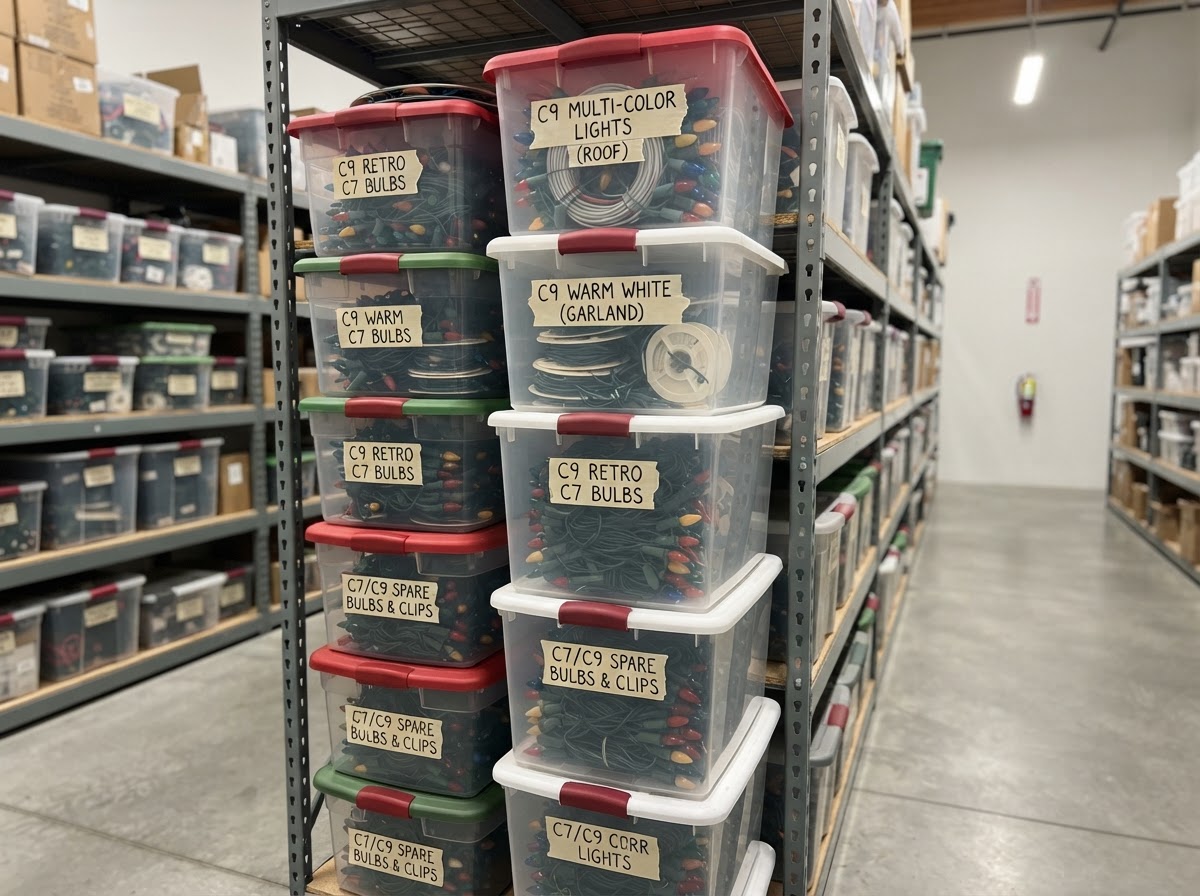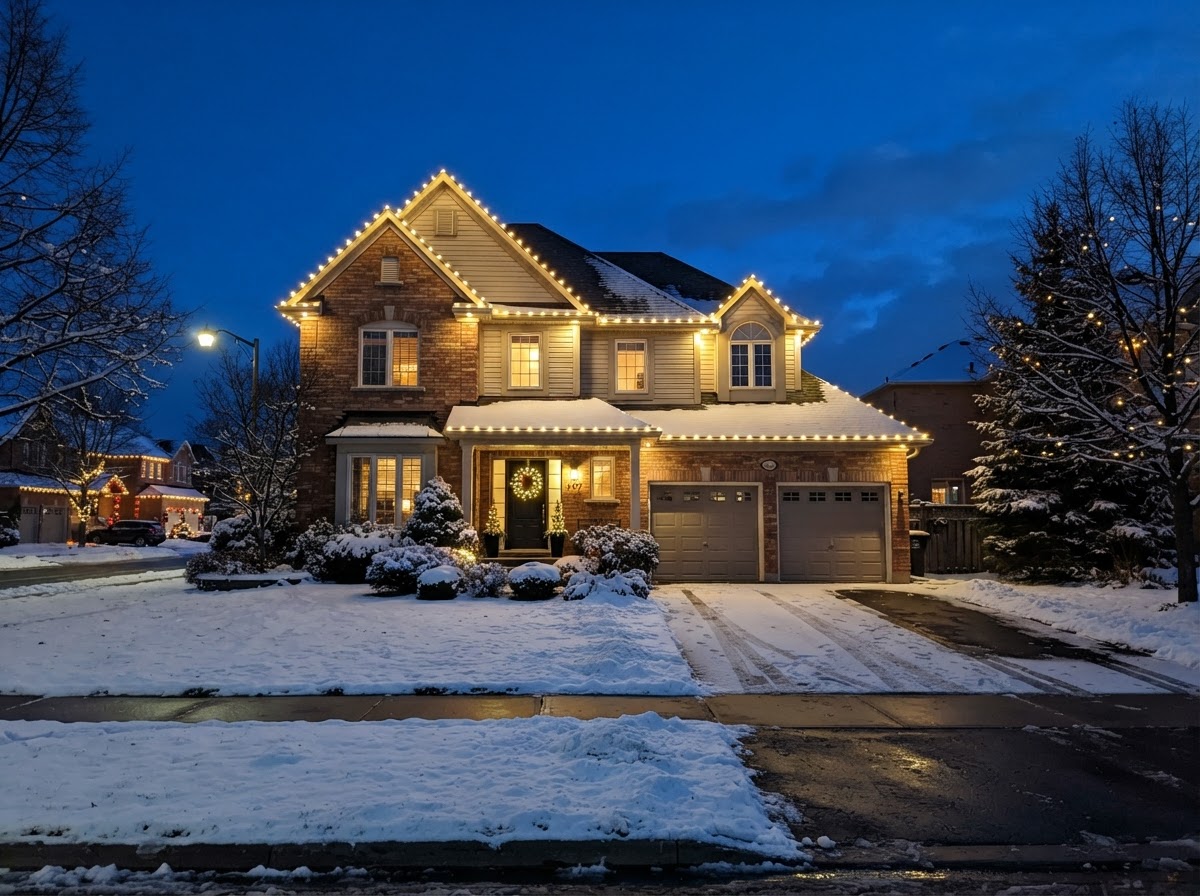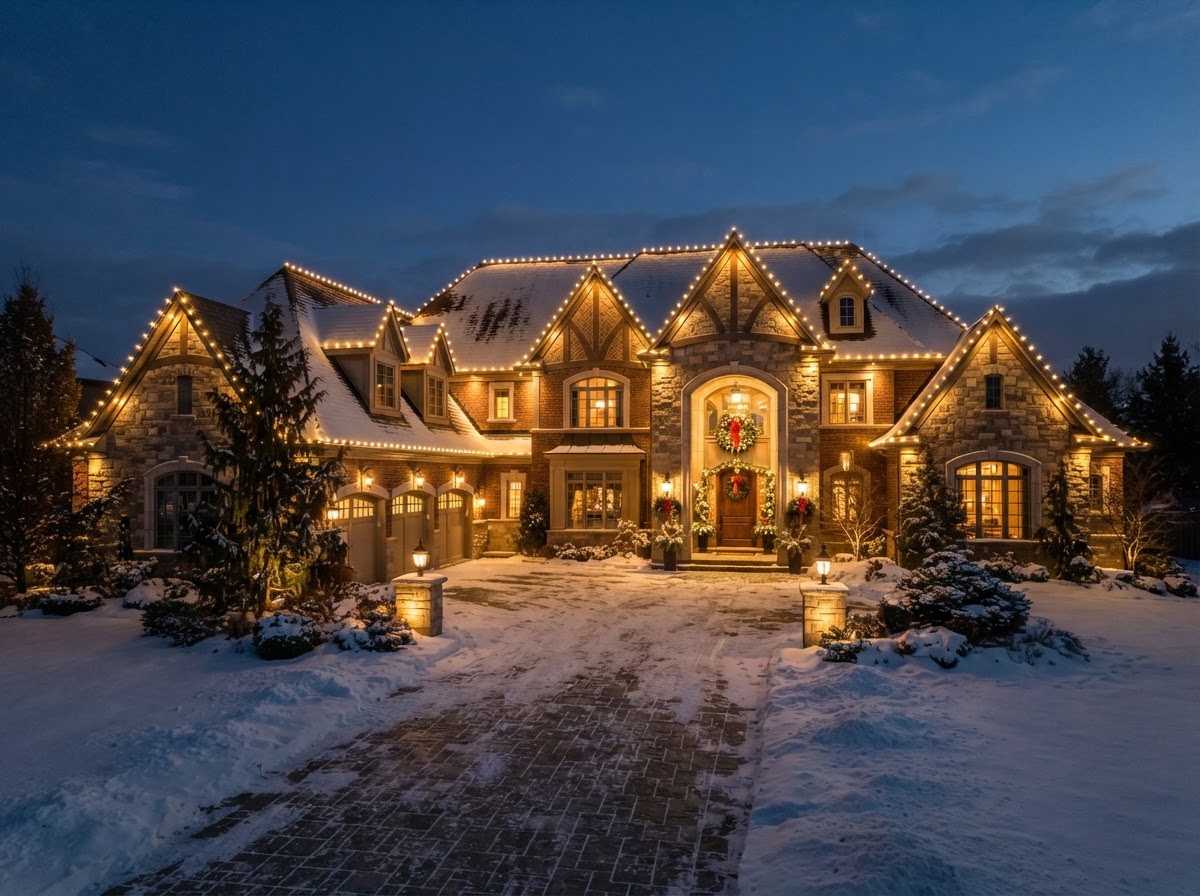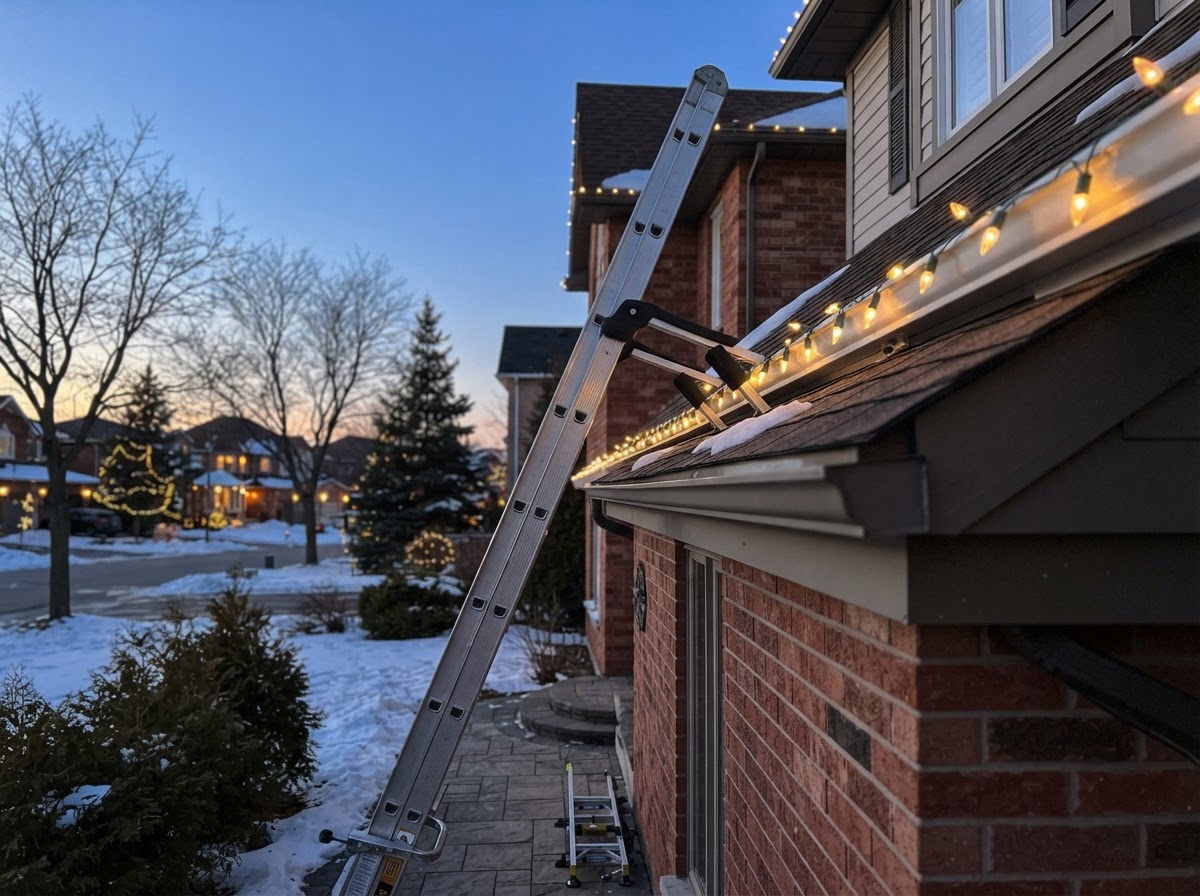
We install Christmas lights safely on Richmond Hill roofs using non-invasive shingle clips that grip without piercing, ladder stand-offs that keep weight off fascia and gutters, dedicated circuits to prevent overload, and ladder-safety-certified crews. No nails, no staples, no voided roofing warranties, and no homeowner on an icy ladder.
Every December, Richmond Hill emergency rooms see homeowners who climbed an icy ladder to hang or fix a single string of lights. Holiday lighting safety is about more than a pretty display, it is about protecting your roof, your home, and the people on the ladder. This guide explains how we install Christmas lights safely on York Region homes, the specific risks of DIY installation, and why the details that protect your roof are the details most homeowners never think about until they cause a problem.
We have spent 3-plus years installing holiday displays across Richmond Hill, Vaughan, Markham, Aurora, and Newmarket, and safety is the foundation of every install. A beautiful display that damages the roof or sends someone to the hospital is a failure, no matter how good it looks. This guide walks through the three pillars of safe installation, ladder safety, roof protection, and electrical safety, so you understand what goes into a professional install and why the cheapest quote is often the riskiest one.
How do you install Christmas lights safely without damaging a Richmond Hill roof?
We install Christmas lights safely on Richmond Hill roofs using non-invasive shingle clips that grip without piercing, ladder stand-offs that keep weight off fascia and gutters, dedicated circuits to prevent overload, and ladder-safety-certified crews. No nails, no staples, no voided roofing warranties, and no homeowner on an icy ladder.
The three safety pillars
- Ladder safety: certified crews, stand-offs, and proper footing.
- Roof protection: non-invasive clips, no nails or staples.
- Electrical safety: dedicated circuits, weather-rated connections, no overload.
Ladder safety: the risk nobody talks about
Let us start with the one that matters most, because it is the one that sends people to the hospital. A two-story Richmond Hill home means working 20-plus feet in the air on a roofline that, by December, is cold, sometimes frost-dusted, and never as stable as it looks from the ground. Falls from ladders are one of the most common holiday-season injuries, and they happen to capable, careful people who simply underestimated the conditions. The frost on the ladder feet, the uneven settled lawn, the cold that makes you less steady after an hour, the overreach to get one more foot of run without repositioning, every one of these is a fall waiting to happen.
Our crew is ladder-safety certified, which means trained in proper ladder placement, footing, and technique. We use ladder stand-offs, brackets that hold the ladder a few inches away from the wall, so the ladder's weight rests on the roof edge or the wall, never on the fascia or the gutters. We work in teams so someone is always footing the ladder. And we carry insurance, so if anything goes wrong it is covered, not on your homeowner's policy. When you hire a certified crew, you are not just paying for a prettier display, you are paying to never be on that ladder yourself.
The real risks of DIY ladder work
- Frost and ice on rooflines and ladder feet by December.
- Overreaching to get one more foot of run without repositioning.
- Uneven ground: Richmond Hill lawns settle and are not always level.
- Cold and fatigue: you are less steady after an hour in the cold.
- No spotter: most DIY installs are solo, with no one footing the ladder.
Roof protection: the damage you cannot undo
This is the safety pillar that protects your home, and it is where the cheapest installs cut corners. The DIY shortcuts for attaching lights, nails, staples, and adhesive clips, all damage the roof. Nails and staples puncture the shingle, creating a hole that lets water under the shingle and voids the roofing warranty. Adhesive clips leave a residue that degrades the shingle over time and is difficult to remove cleanly. When a spring storm reveals a leak traced back to a nail hole from a December light clip, you are looking at a repair that dwarfs the cost of a professional install.
We use non-invasive shingle clips that grip the edge of the shingle without piercing it. The clip slides under the shingle tab and holds the wire in place with tension, not penetration, so the shingle stays intact and the warranty stays valid. It is a small detail with a big consequence, and it is the difference between an install that protects your roof and one that damages it. A professional install protects the most expensive system on your home while delivering a better-looking display.
How DIY clips damage roofs
- Nails and staples: puncture shingles, create leak paths, void warranties.
- Adhesive clips: leave residue that degrades shingles over time.
- Wire under shingles: forcing wire under tabs can lift and break them.
- Weight on gutters: resting ladders on gutters bends or cracks them.
- Shingle granule loss: foot traffic on the roof strips protective granules.
Electrical safety: the fire risk
The third pillar is electrical safety, and it is the one that can turn a beautiful display into a fire hazard if done wrong. The common DIY mistake is daisy-chaining too many strings onto a single outlet, which overloads the circuit, trips the breaker, and in the worst case causes a fire. The other common mistake is using indoor-rated extension cords and connections outdoors, where moisture gets in and creates a short or a shock hazard. A professional install uses weather-rated, commercial-grade extension cords and connections, and it plans the electrical load so no single circuit is overloaded.
We plan the electrical load on every install, mapping the runs to available circuits and adding dedicated lines where needed. We use commercial-grade, weather-rated cords and timers, and every connection is made with moisture in mind. The result is a display that is safe to run through January storms, not just a dry November evening. Electrical safety is not glamorous, but it is the difference between a display you can enjoy and one you have to worry about.
Electrical safety essentials
- Dedicated circuits: no daisy-chaining that overloads a single outlet.
- Weather-rated cords: commercial-grade, rated for outdoor moisture.
- Weather-rated connections: every junction protected from moisture.
- Proper load planning: map runs to circuits so nothing overloads.
- Digital timers: programmed so the display is not running unattended 24/7.
The 48-hour repair promise: safety through the season
Safety does not end on install day. January storms in York Region are real, and a gust can pop a clip, a strand can go dark, or a timer can glitch. When that happens, the safe response is not for you to climb an icy ladder in December, it is a call to a crew that comes back within 48 hours to fix it. Our 48-hour repair promise means we handle every issue through the season, so you never climb a ladder in winter and never hunt for a dead bulb in the cold.
This is the safety benefit that converts DIYers more than any other. The homeowners who call us in mid-December, frustrated by a half-dark display they cannot safely fix, are the ones who book a full turnkey package the next year. Once you have experienced not having to climb a ladder in winter, you do not go back.
Why the cheapest quote is the riskiest
Let us be honest about price shopping for holiday lighting. A quote that comes in well below everyone else is cutting corners somewhere, and in this industry, the corners are safety. The cheap crew uses nail-on clips that void your roof warranty, skips the ladder stand-offs that protect your fascia, daisy-chains the electrical load, and is gone after install day with no repair promise. The display looks fine when they leave, but the roof is damaged, the electrical is a hazard, and you are on your own when a strand goes out in January.
The honest value of a professional install is that it protects your roof, your home, and the people on the ladder, and it stands behind the work through the season. That is worth more than the cheapest quote, and it is why our clients book us year after year. Protect your home and your family with our Christmas light installation, backed by our 100% Happy Guarantee.
Ready to Book Your Christmas Light Installation in Richmond Hill?
When you pull into your driveway after a long day, we want your home to look completely revived. Our crew handles every detail, from the first phone call to the final walkthrough, so you never have to worry about ladders, streaks, or missed spots. We back every job with our 100% Happy Guarantee and we never nickel-and-dime you for the little things.
Tap to call now: Call (437) 261-2005 or request your free instant quote online. We serve Richmond Hill, Markham, Vaughan, Aurora, Newmarket, and King City.
Shine & Revive Inc. • 20 Thomas Legge Crescent, Richmond Hill, ON L4E 4W1 • (437) 261-2005 • contact@shineandrevive.ca